Molly Omann
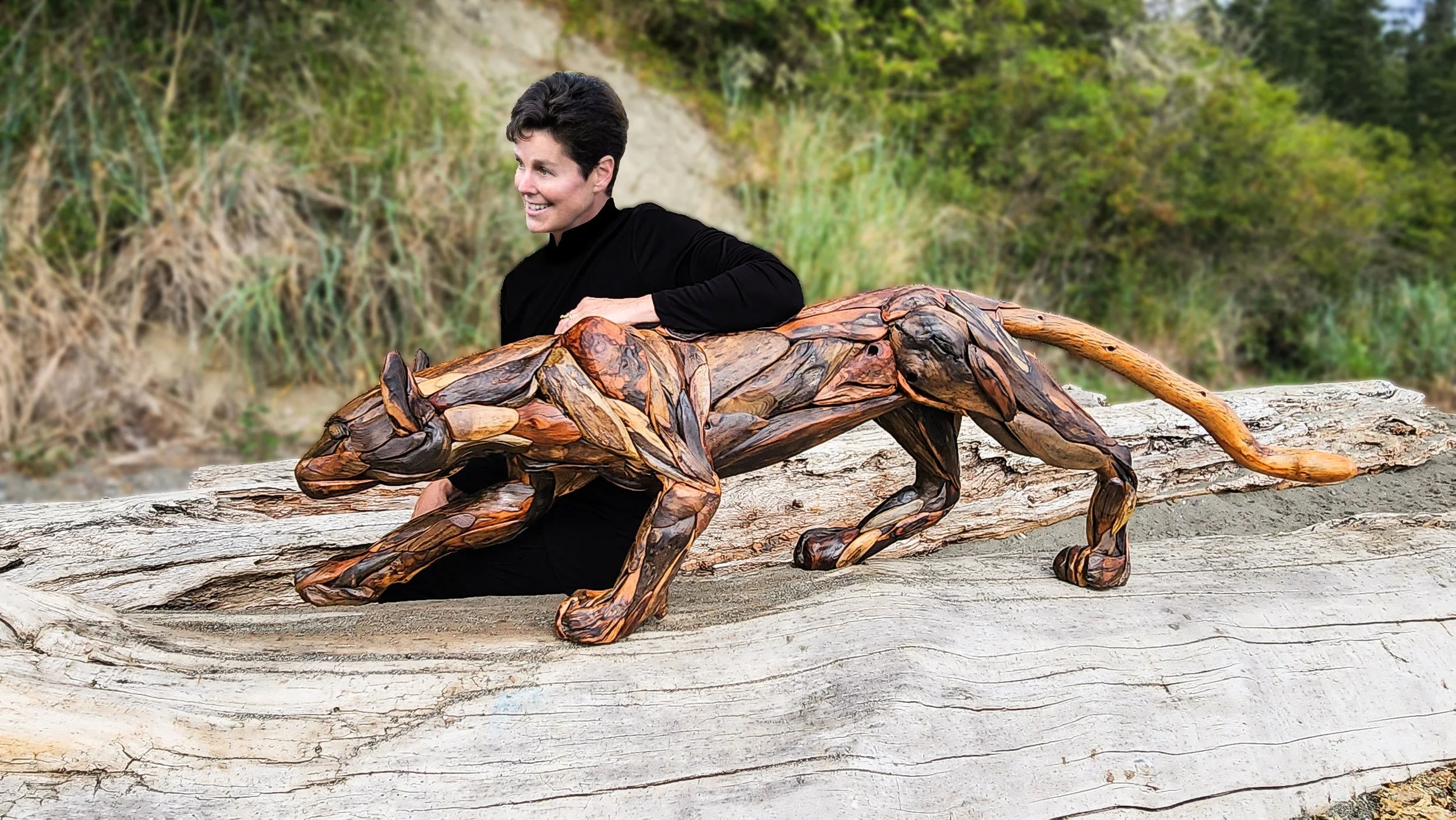
Calm, caring, and genuine, Molly Omann crossed my path a few years ago. At first, I was struck by how much she loved children, and they loved her, that she gave her time and energy to them freely, even teaching Sunday school to preschoolers. Molly is all those things, but she is also a dynamic, creative powerhouse of a woman. An artist with a brilliant eye for detail and proportion, she is not afraid to take on a challenge or to encourage others to pursue their own creativity. Molly Omann brings her dedication and heart to every piece of art she creates. There is a positive, almost symbolic, energy in her sculptures that imbues strength, endurance, and at the same time, the calm and serenity of nature.
I caught up with Molly and asked her these questions:
What do you do for work?
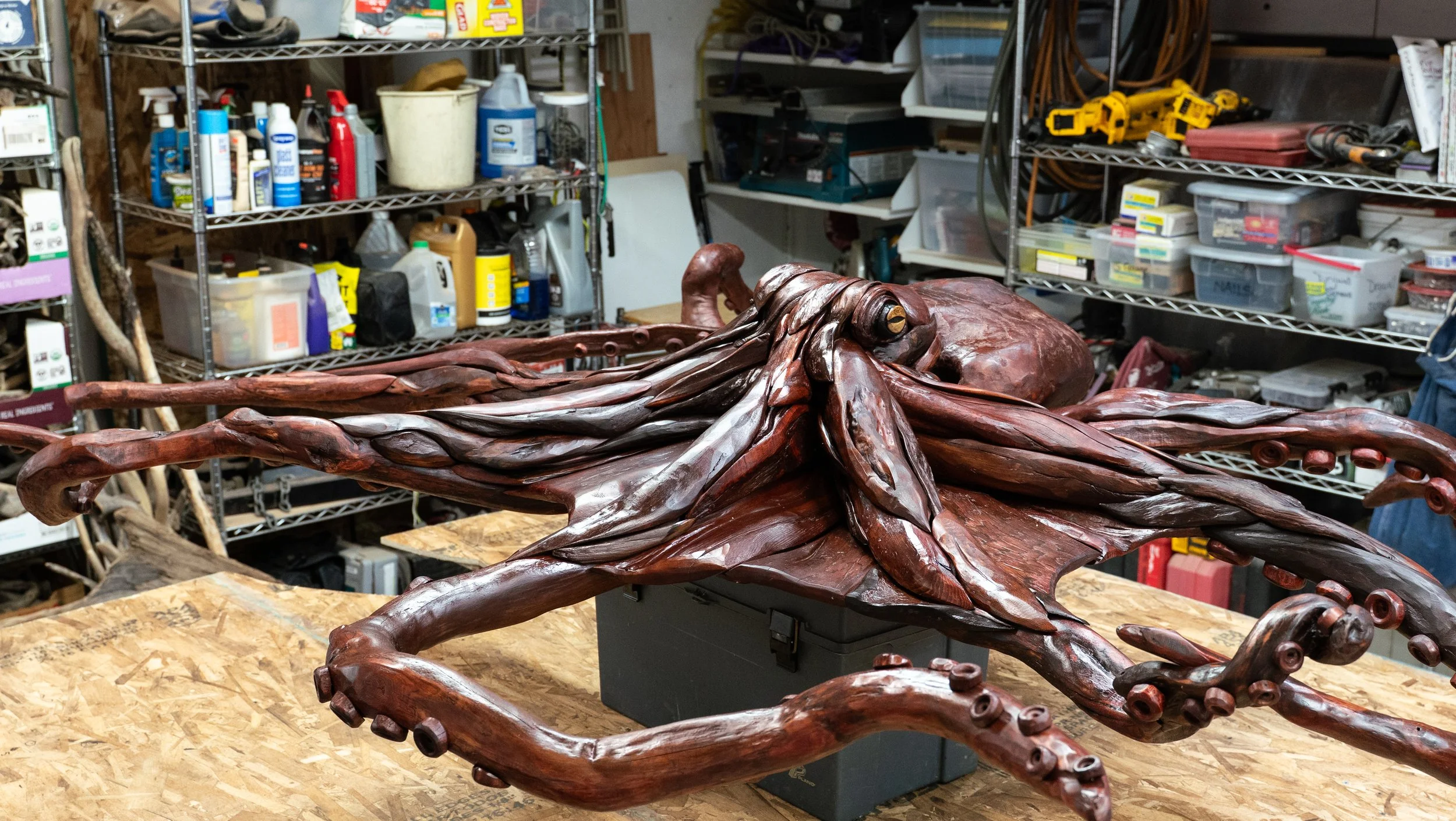
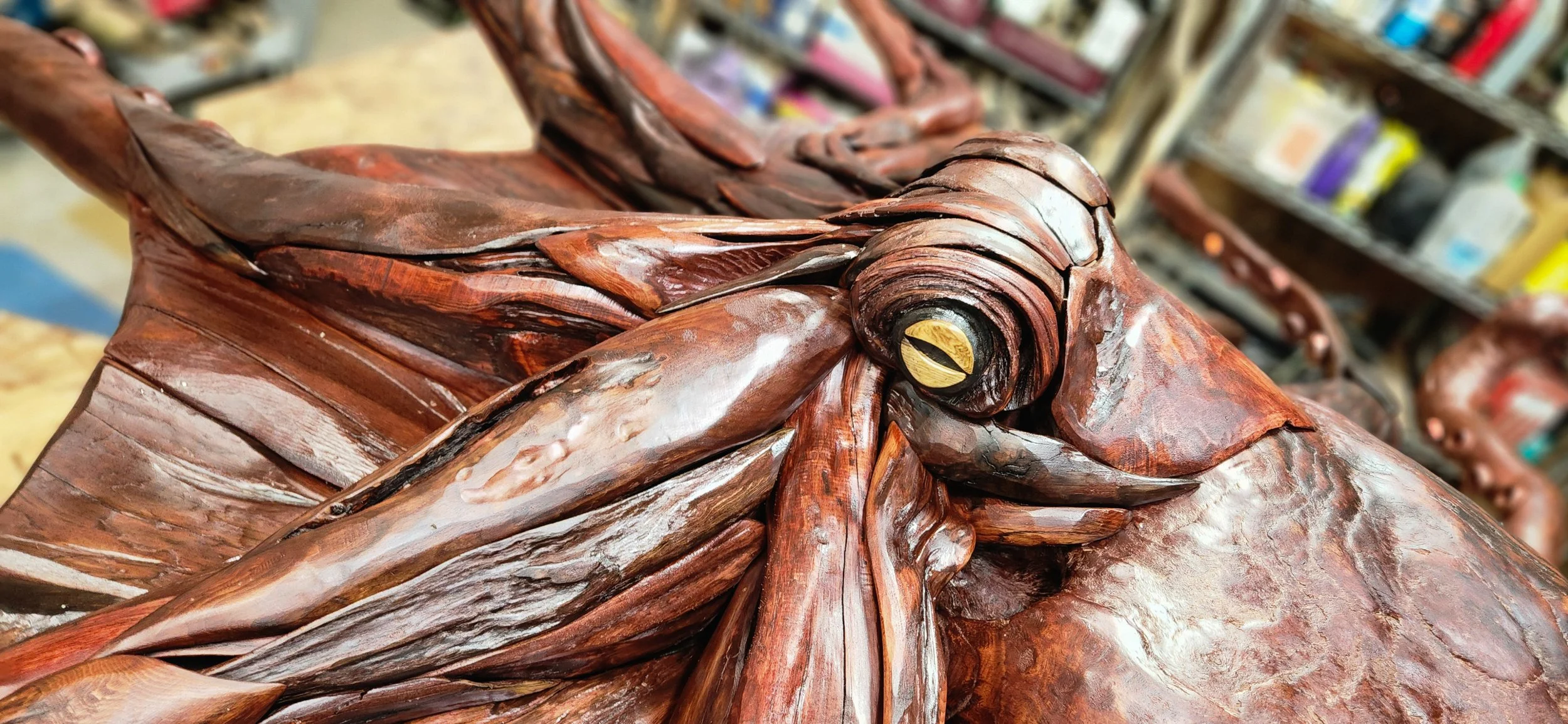
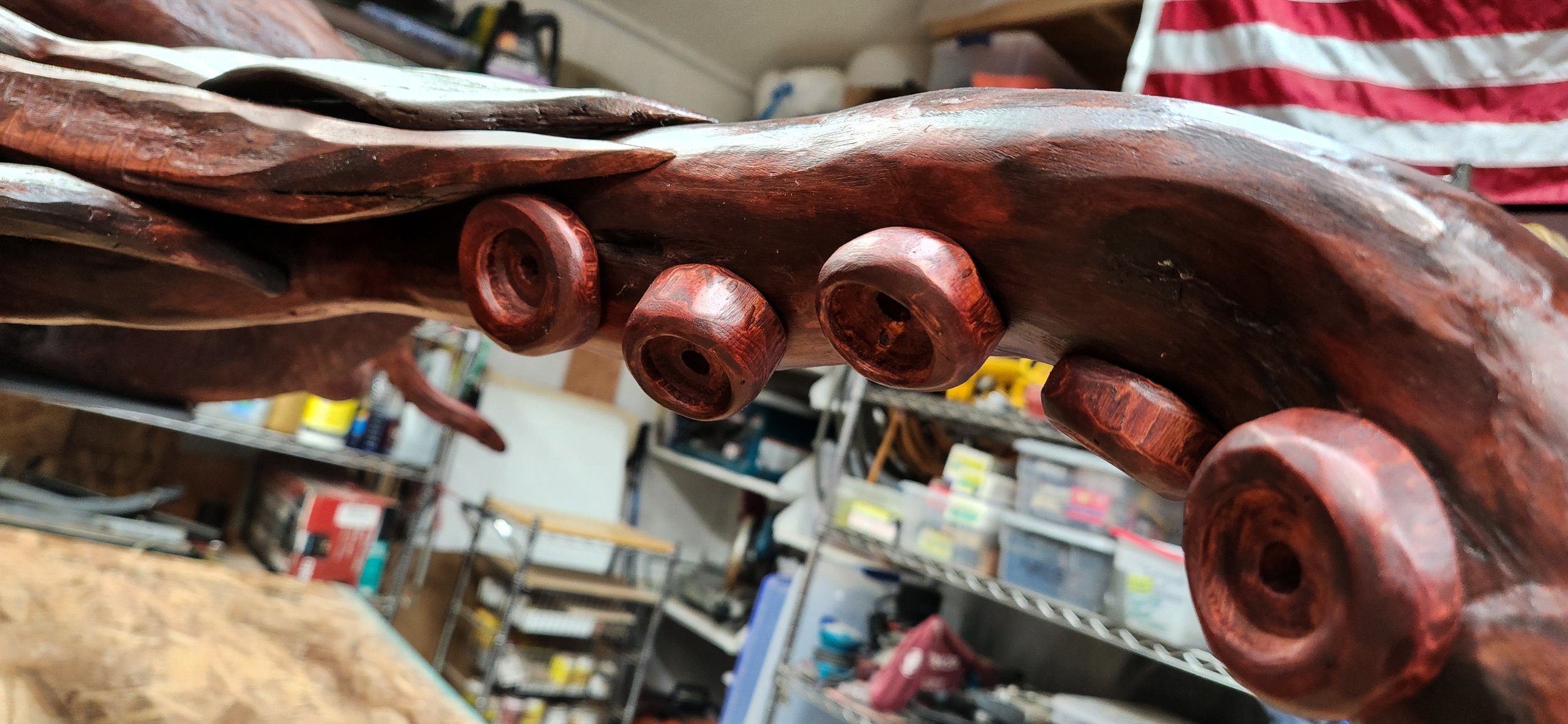
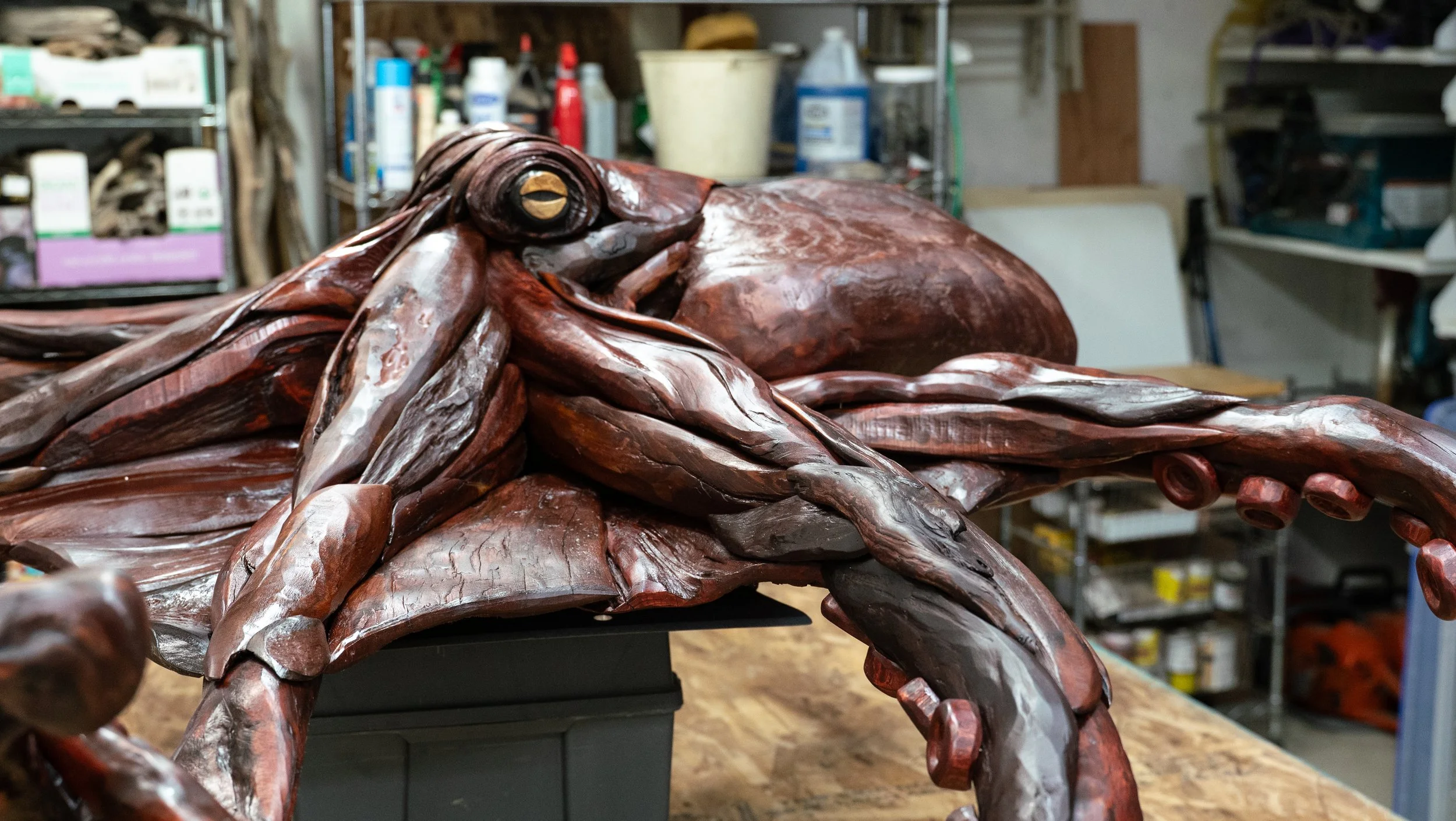
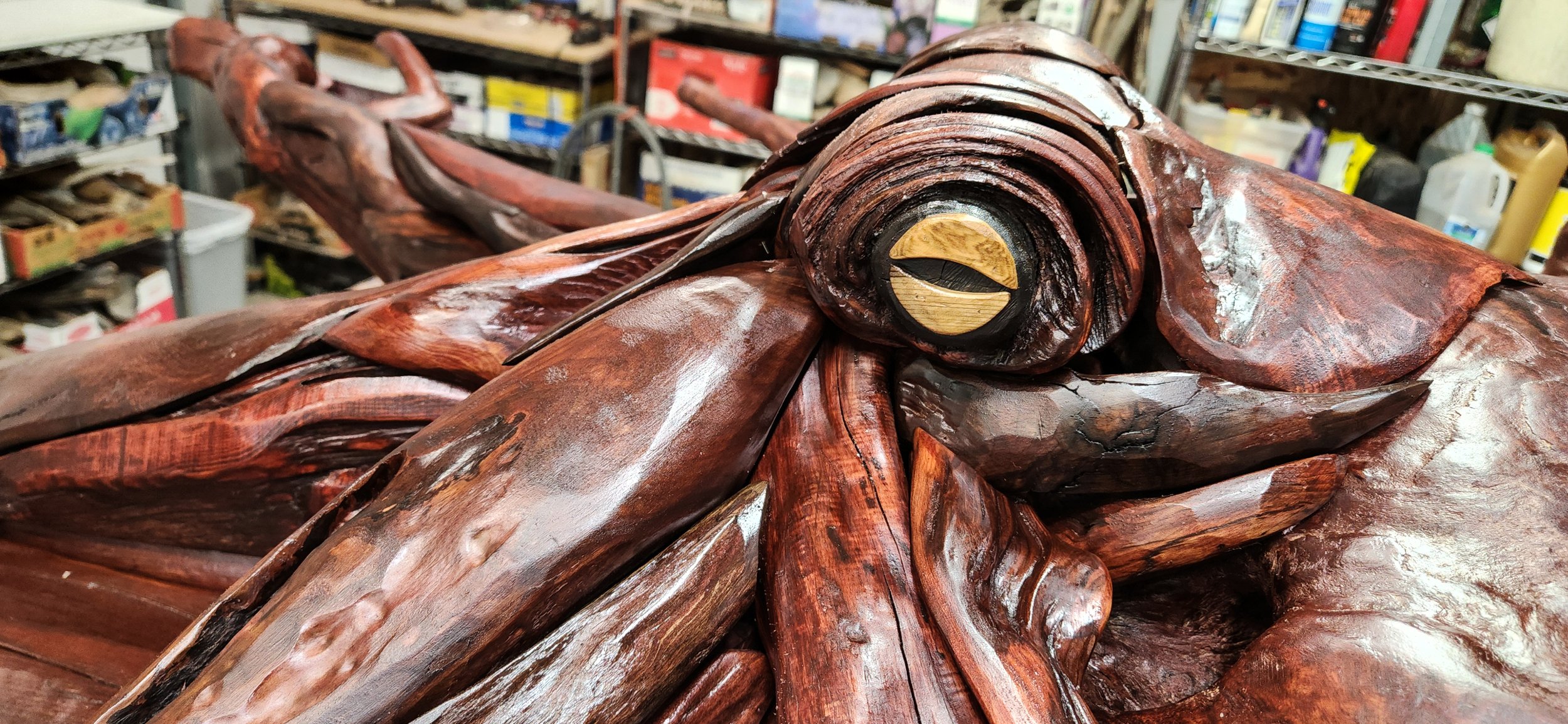
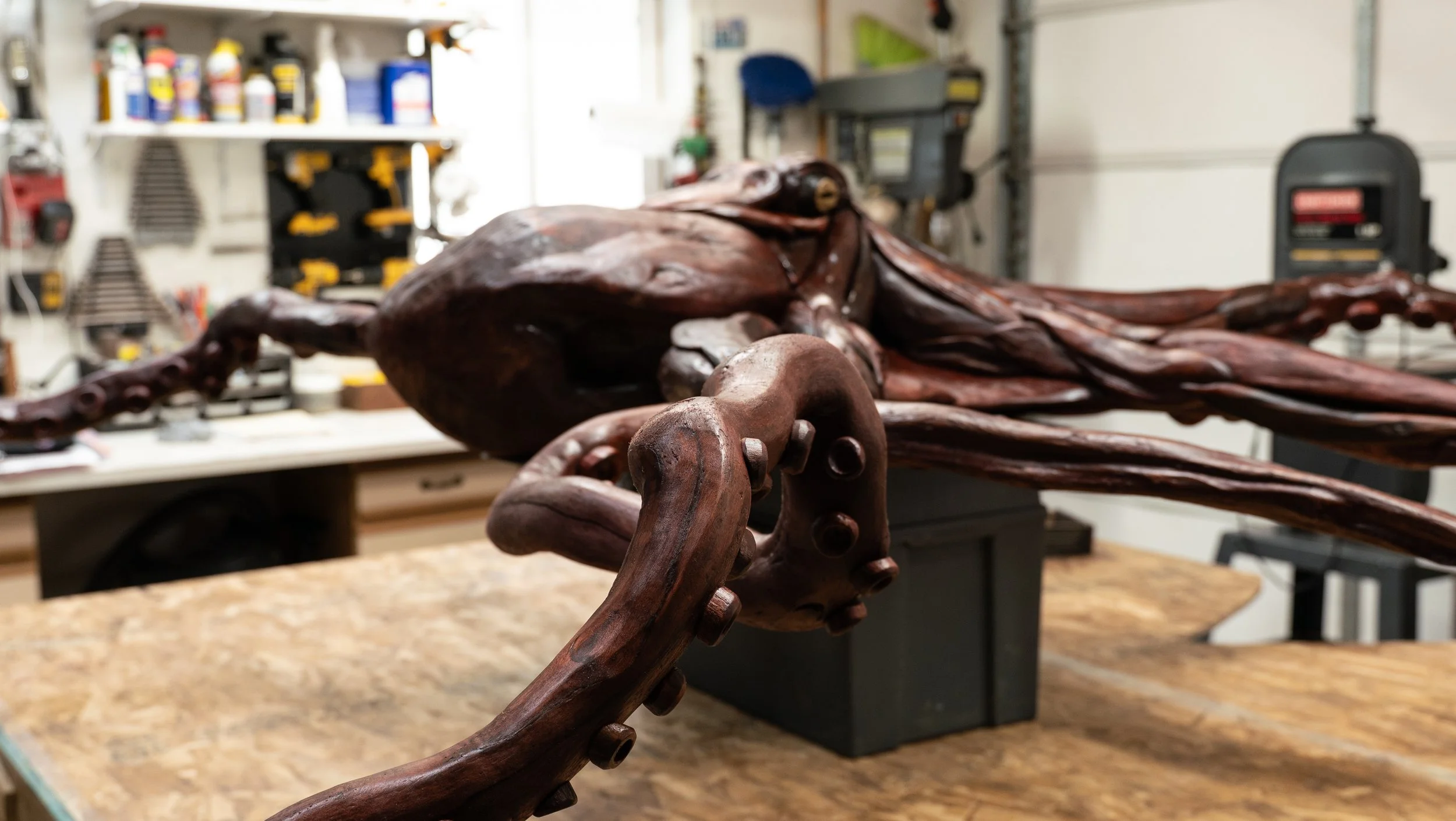
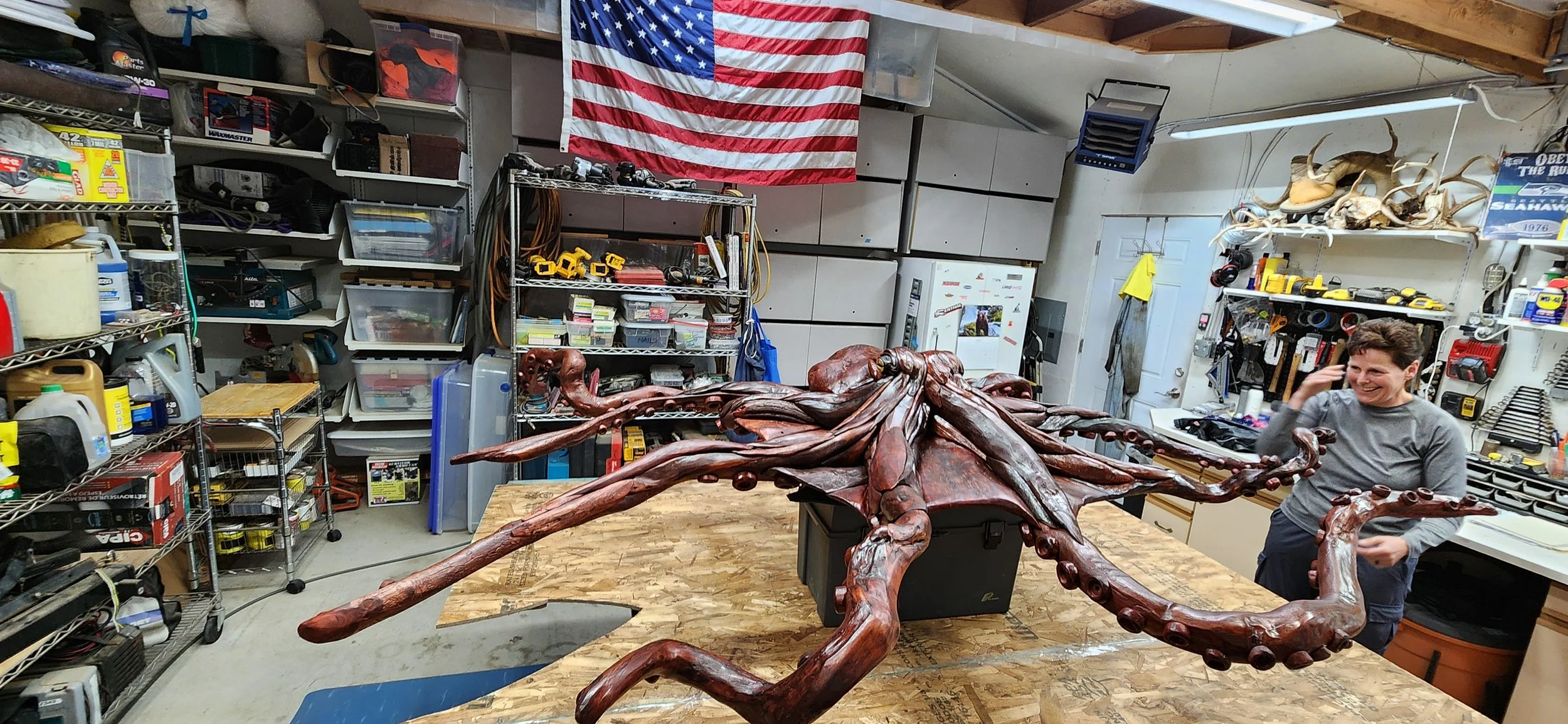
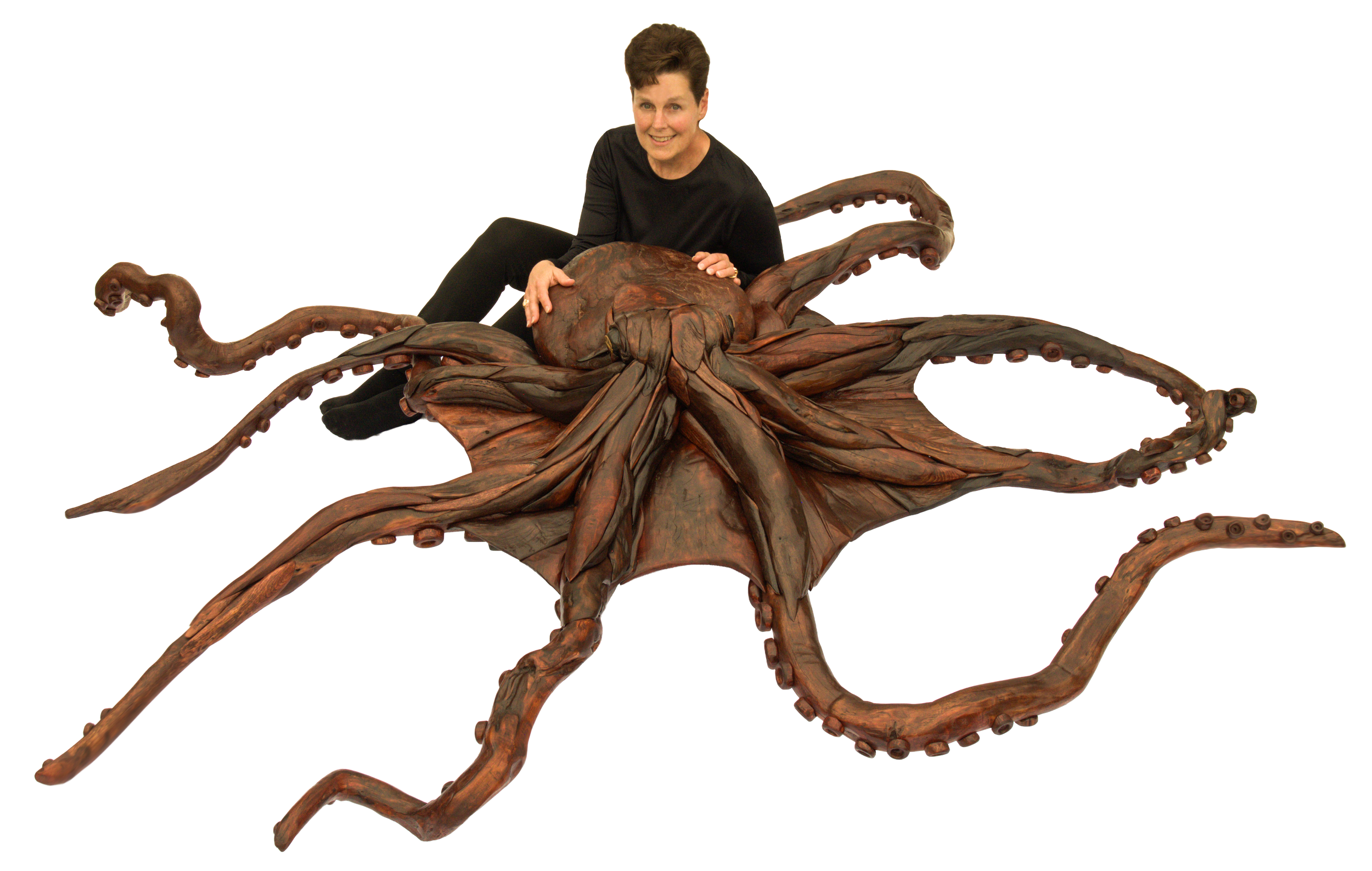
Molly: This is my full-time job officially for four years now, Driftwood Sculptor, through commissions, shows, and my website. Before that, I worked for a newspaper as a graphic artist. I love this work. I just finished a commissioned piece, a Giant Pacific Octopus; its varnish is curing right now. It will be delivered and installed soon.
What do you do for hobbies?
Molly: For hobbies, I am truly blessed to say that my husband is my best friend, and we do almost everything together, including our ministries at church. We also love camping. We have a truck camper and go to the coast. We do razor clamming, and we’ve done a lot of fishing and diving. We've both sold our gear now, but we used to dive a lot. We were on the dive rescue team together in Alaska when we lived there. Once my oldest son was born, I had to back away a bit because I couldn't respond as often to the pager with a baby. But I was still on the team. We both love fishing, boating, and camping, and I used to hunt, but not so much now that we don’t live in Alaska. In Alaska, there's a lot of subsistence hunting, and the food is so healthy. My husband has a motorcycle, and we ride together; I ride on the back.
What is your creative outlet?
Molly: So many mediums, so little time! I used to paint. I did pastels a lot when my boys were little. It was something easy to pick up when they were napping. When they were young, I was a stay-at-home mom, I chose to prioritize that over working. But I would teach art classes out of my home, which was really fun. I’ve had different creative outlets at different times. There are just so many things I like to do, would like to try.
Our oldest son is very artistic, he is an adult and ex-military now, everybody has their own art form, don’t they? He calls his body his canvas; he has a lot of tattoos, nice ones. At Christmas, a few times he'd ask me, "Mom, will you design a tattoo for me?” So I said, “No problem, okay.” I would never want one myself, but he has one of them full on his back, a lighthouse with a dove and the symbols of God and peace, and it says “light in the darkness.” In fact, he had me design it while he was in Afghanistan serving in the armed forces. My younger son has a few, also, and I've designed them for him, too. It’s pretty cool.
I have thought about working with metal; I would love to learn to weld, but again, so many mediums, so little time! I would love to do steampunk. But my husband, Brian, talked me out of steampunk. He said wisely something like, “What if you tried focusing on one thing, and do it well?” And he was so right, because I have really refined my domain over the last 4 years, with one primary medium. My driftwood sculptures are a real creative outlet for me now.
“There are just so many things I like to do, would like to try. ”
On the side, when I need a break from driftwood sculpting, I do art workshops at church. They are fundraisers, by donation most of the time, and we raise money to help support people and causes, my husband and I are both on the missions committee at church. It is always fun to spin off and teach for a while, it’s my little break. I love to teach, encourage people, and catch the excitement of doing creative projects with a group. We've done pastels, painting, pen and ink, all kinds of different life drawing, and basic drawing, we’ve even made sea glass jewelry.
What fuels your desire to create?
Molly: I think it's a God-given gift. You know what, everybody has their gifts. Math is a gift, and it's beautiful for some people, but me and numbers don't get along. That's what I say, “I can do ‘em, but we don't get along.” I have to do numbers because I do everything in my sculptures to proportion, I have a proportion wheel and stuff. But when I was a little girl, I was always set on growing up to be an artist, and I just always did art. I have the need to create, and I do, I always have.
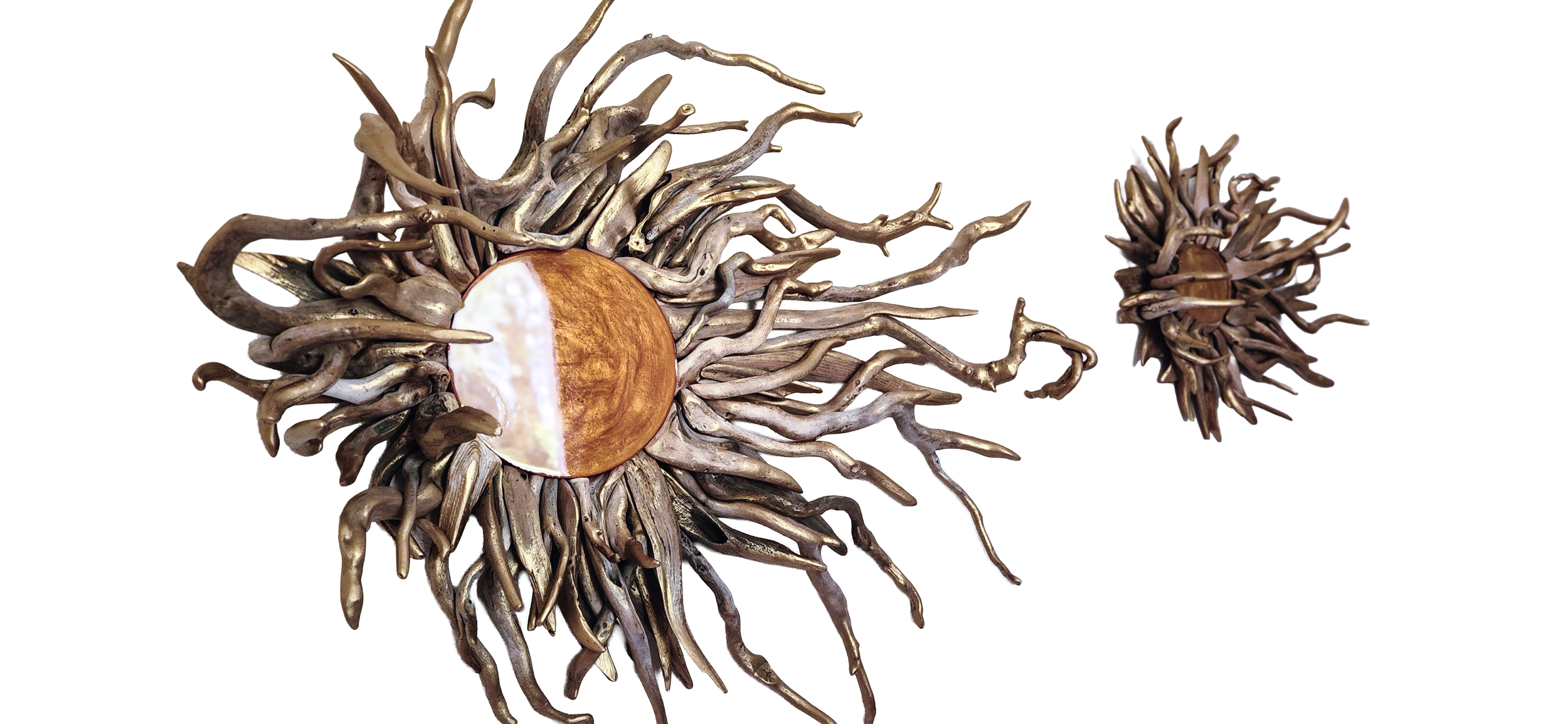
What is your favorite medium (or top 3)?
Molly: Oh, boy, that's hard to choose, I love so many things. I do love pastels, and I don't do them very much anymore. But because I helped Brian build our house and I'm not a girly girl, I do like tools, as you can see in my workshop. So, tools might be a medium. Yeah, Brian had to share his tools with me until I got off and running, and now we buy tools together, and I buy my own, and he shares mine.
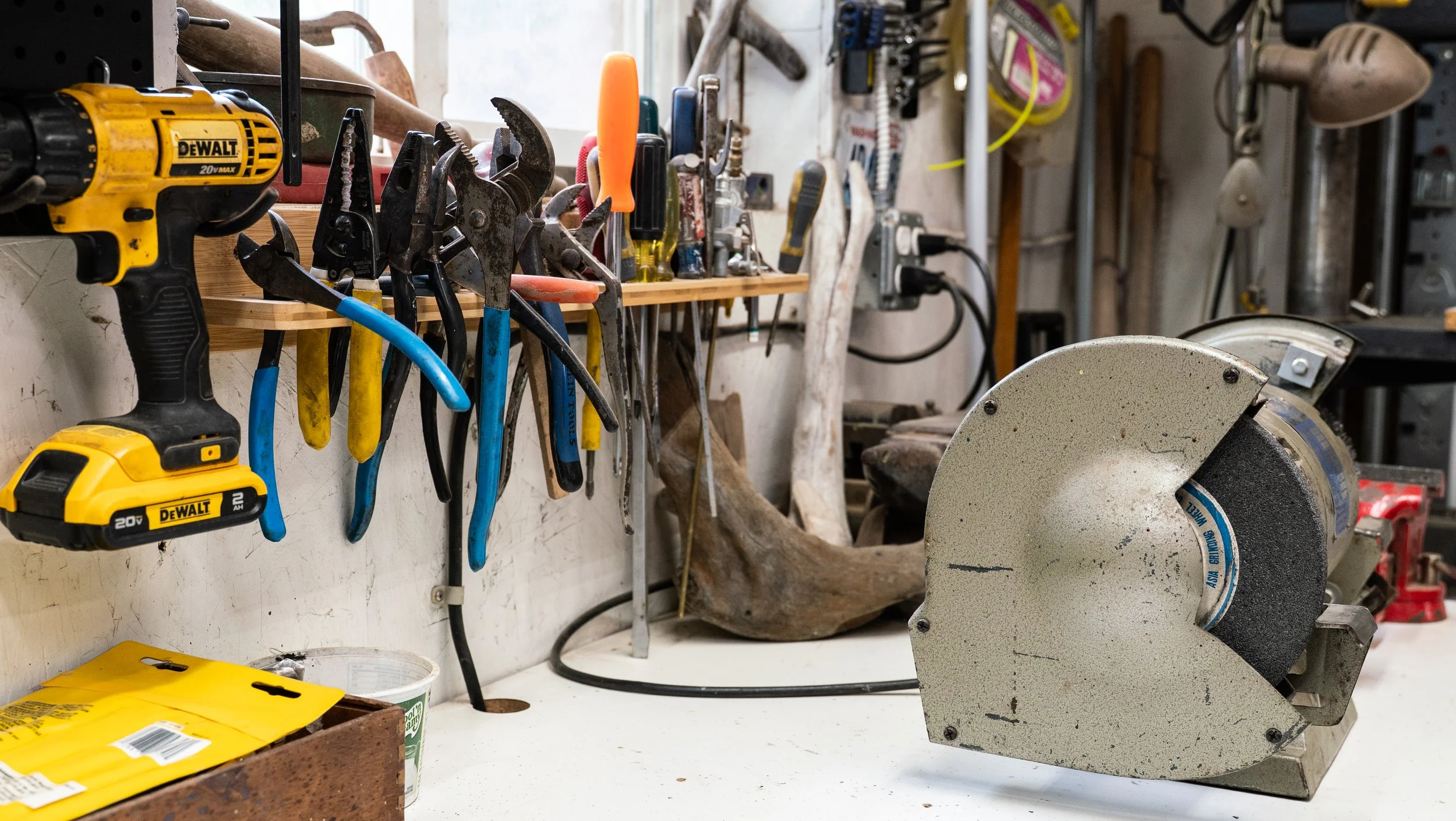
“I do like tools, as you can see in my workshop.”
How did you get started?
Molly: My husband was traveling for work, and I wanted to surprise him for his 50th birthday, so when he came home, the elk sculpture was there in our yard. He was absolutely shocked. That was the first driftwood sculpture that I made.
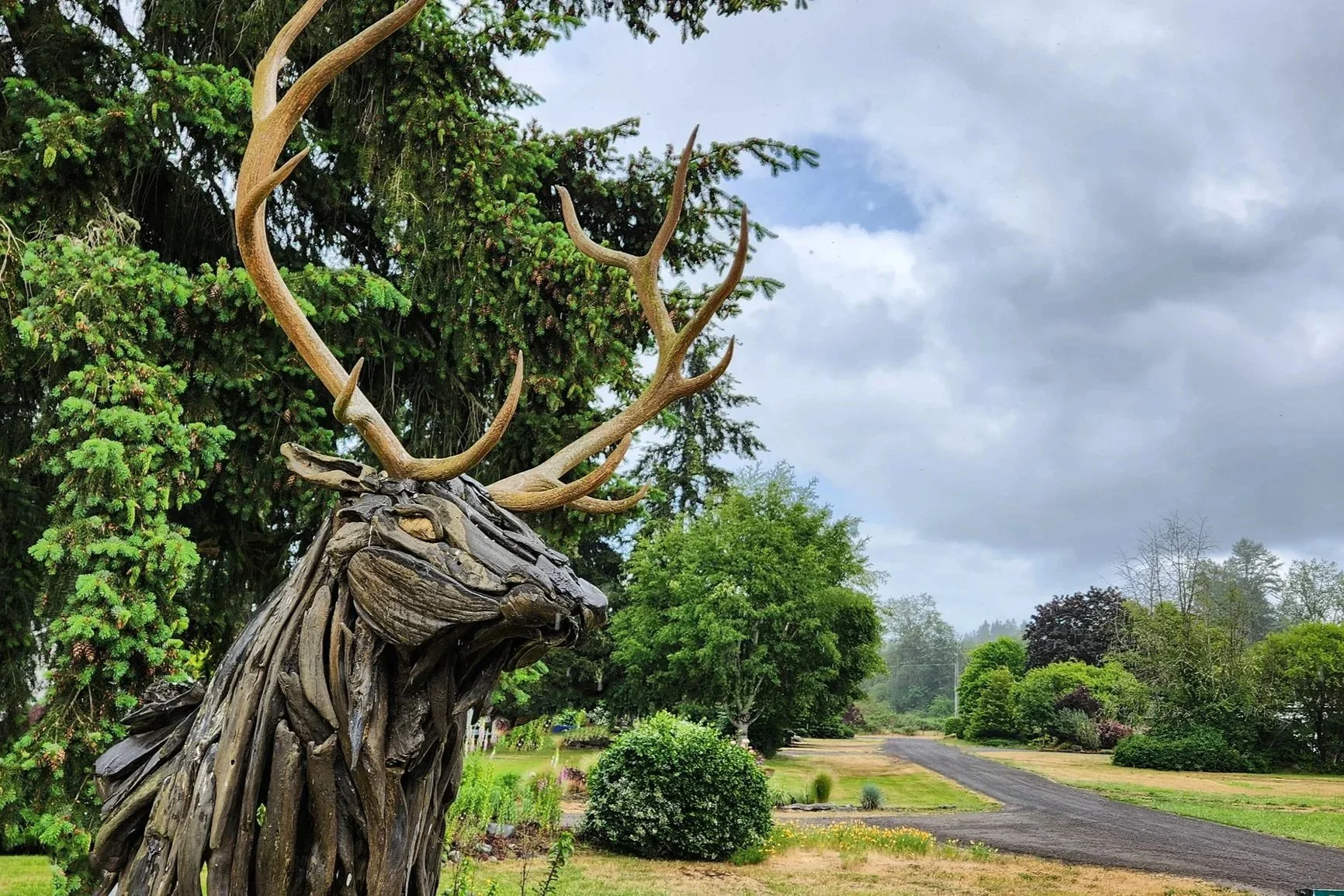
“the elk sculpture …was the first driftwood sculpture that I made.”
Molly: I love beaches, and so I started picking up wood on the beach and making all kinds of stuff with it. Then I discovered a gal who used to make wood horses, a lot of horses. I’d seen photos of her work online, and I always wanted to try it. I thought, “Oh, I could do that, I know I could.” I studied her work and kept thinking, “You know, I can do that.” And that’s how I started up with this medium. I really wanted to try it. I was already working with wood at the time; I was making granite-topped tables with driftwood bases and selling them at local festivals, but I wanted to do sculptures. That is when I created the elk sculpture for Brian; it was built 16 years ago now. That was the first sculpture and the one that generated this whole full-time business.
It was kind of a God thing, really. My elk sculpture was featured on one of our local magazine covers. That led to this really amazing gentleman discovering my work. He’s one of my favorite customers, a friend now, and he was looking for a sculpture for his beachfront property. He contacted me. I was still working full-time at the paper. My first reaction to the email he sent was “Oh.” I said to Brian, my husband, “I just don't have time. I didn't know if I should do it,” and I kind of discounted it. But Brian said, “You know, it can't hurt to answer him.” So I did, and it was a real blessing. He said, “I would love to have you do a life-sized sculpture of a man to sit on the log in front of my property, because I want people to come up and see it and enjoy it.” I’ve probably done 7 or 8 sculptures for him now. I would even call him my patron; he's awesome.
At that point, I went part-time. We were just getting past COVID, and I was working for the paper from home anyway. Then my driftwood sculpting started to take off, and I got another commission and another, and Brian said, “You know, we can afford for you to just quit. Why don't you do what you love to do?” At that time, things were going sideways for newspapers, anyway, and I'd been in it for 15 years. I love this work. I'll do driftwood sculpting as long as my body will allow. Eventually, I might not do as big a sculptures, they're a little bit tougher, but I’ll keep doing it. I feel blessed to be able to tell people I get paid to go beachcombing!
What is your process?
Molly: I take pictures throughout the creation process; you can see some of them on Instagram. I use the photos to compile a personalized photo book of the piece as it is being constructed. The book comes with the driftwood sculpture when it is purchased, so the owner can see how it was built.
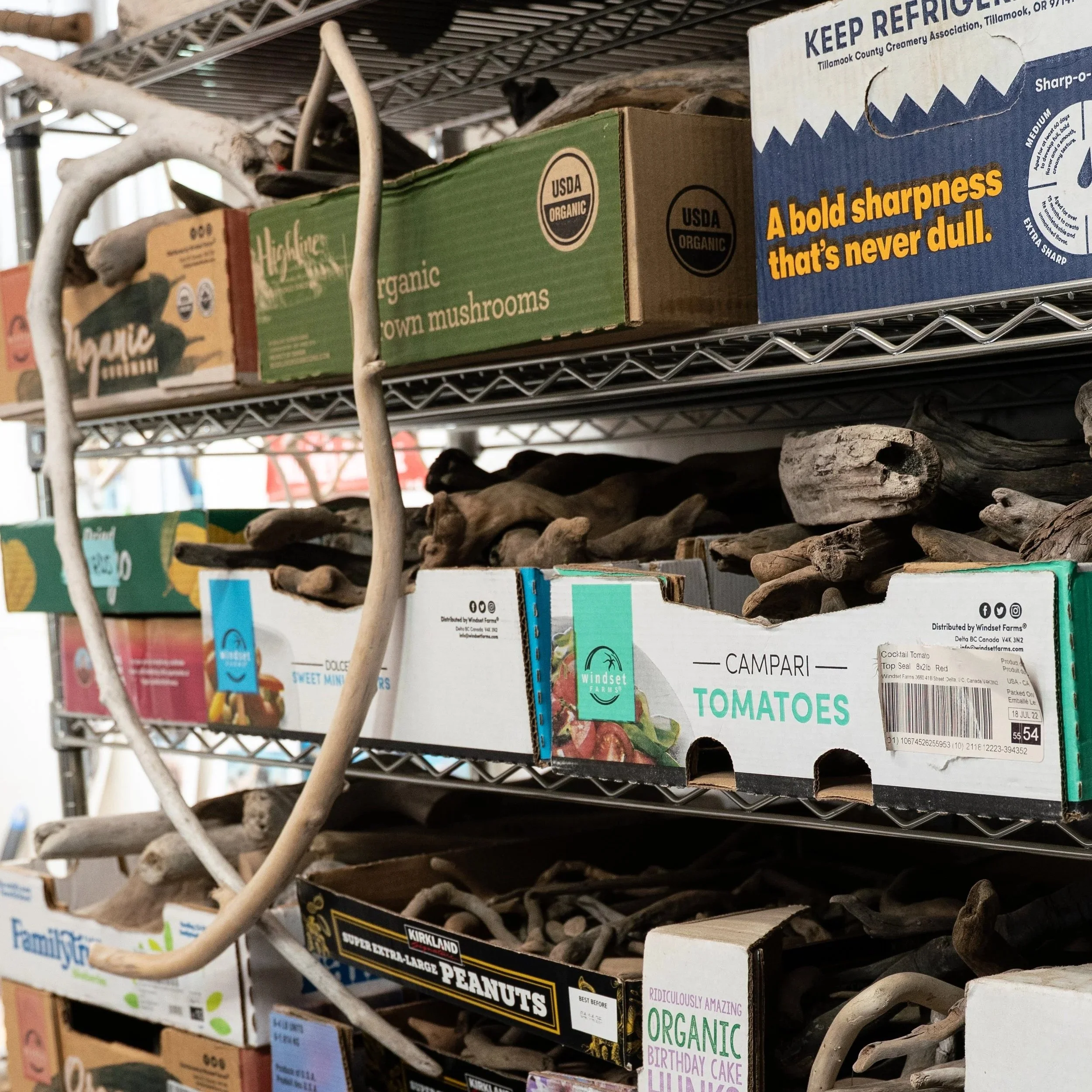
The actual process starts by me going to the beach and collecting wood, then I sort all the wood, because, as you can see in my workshop, I have a lot of wood already. But you know, for example, if I'm doing a dog, the ears are usually their defining feature, and their face. So I've got a box of driftwood shaped like ears. But if there’s not one quite right in my box, I go back to the beach and get some more until I find the right wood shapes.
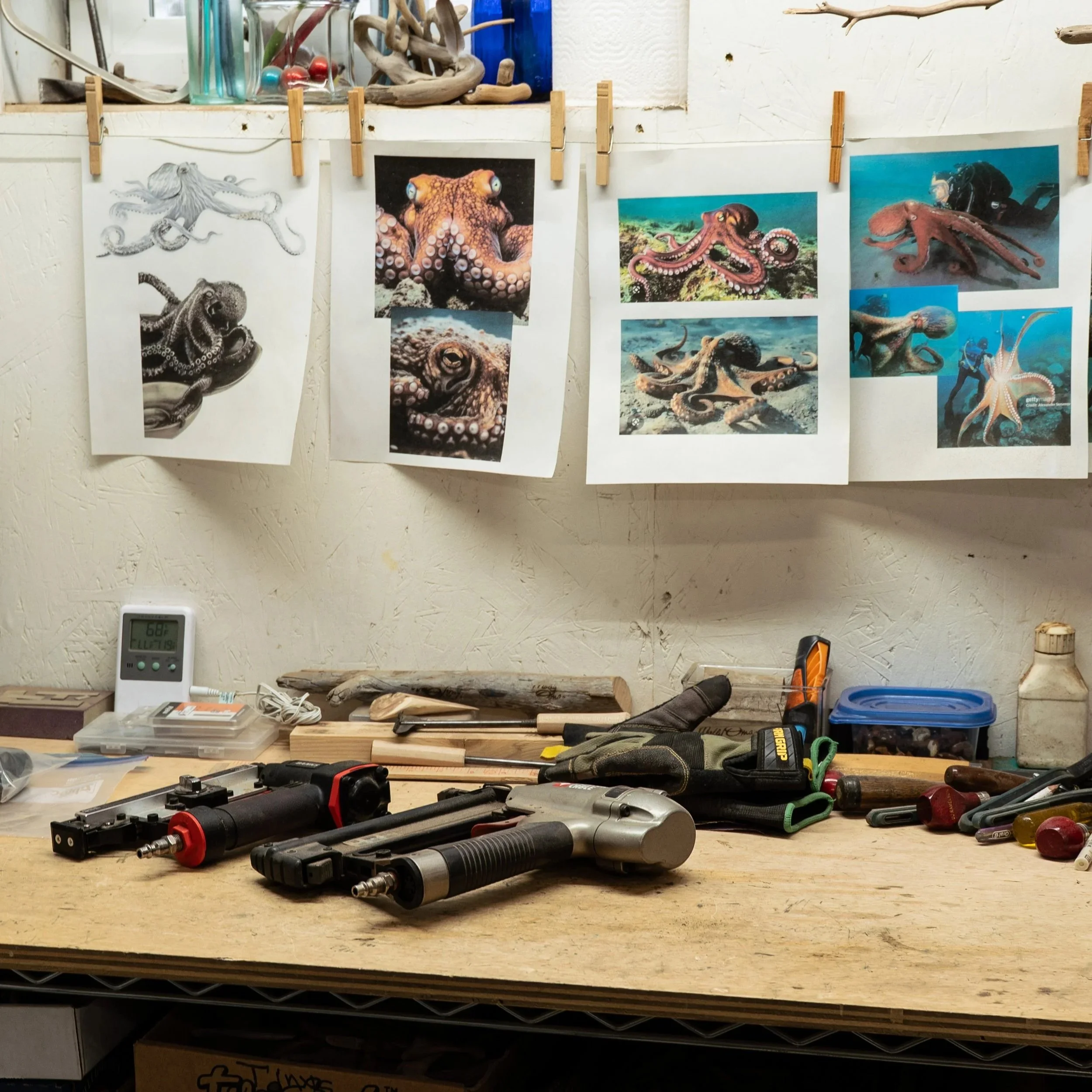
I print out pictures for reference from all angles of the subject, say of a cougar, from top, bottom, front, back, sides, and of their skeleton and musculature. I make realistic sculptures to scale, keeping everything proportional.
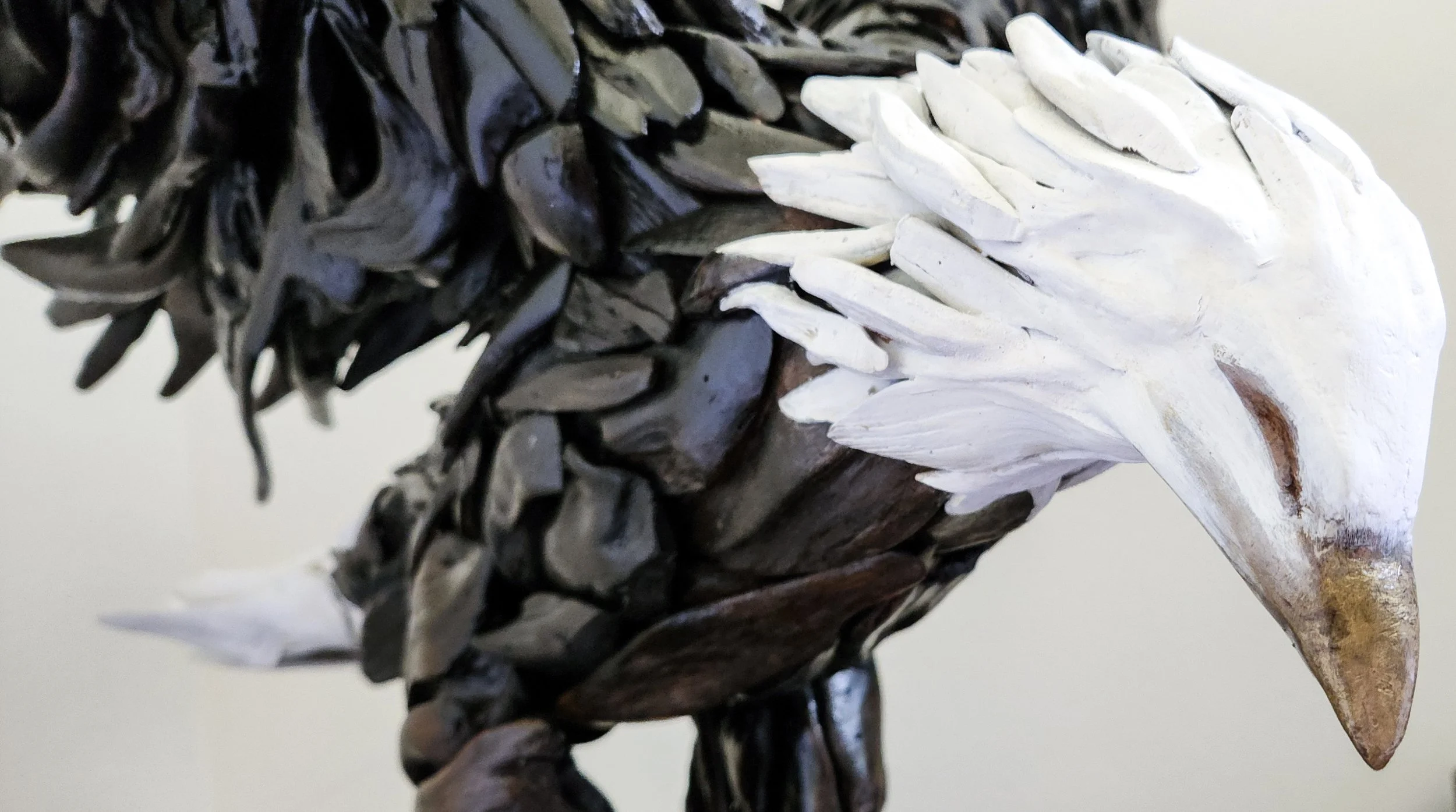
After I gather the wood that I need to start, I do the framing of the subject. The frames of all my sculptures are all wood. A lot of folks ask if I use wire underneath as a framework, and I know some sculptors do, but I don't. I tell people it's like framing in a house; I build the skeleton. First, the torso; then the legs, getting the angles right, and sealing all pieces of wood with tung oil before they go in place. And then securing with stainless fasteners, because I'm not sure if the final products will be going outside or inside; I plan for either way, it's just going to hold up better. Then I keep building, following my reference images, completing the skeleton, then the musculature, and finally the outer layer.
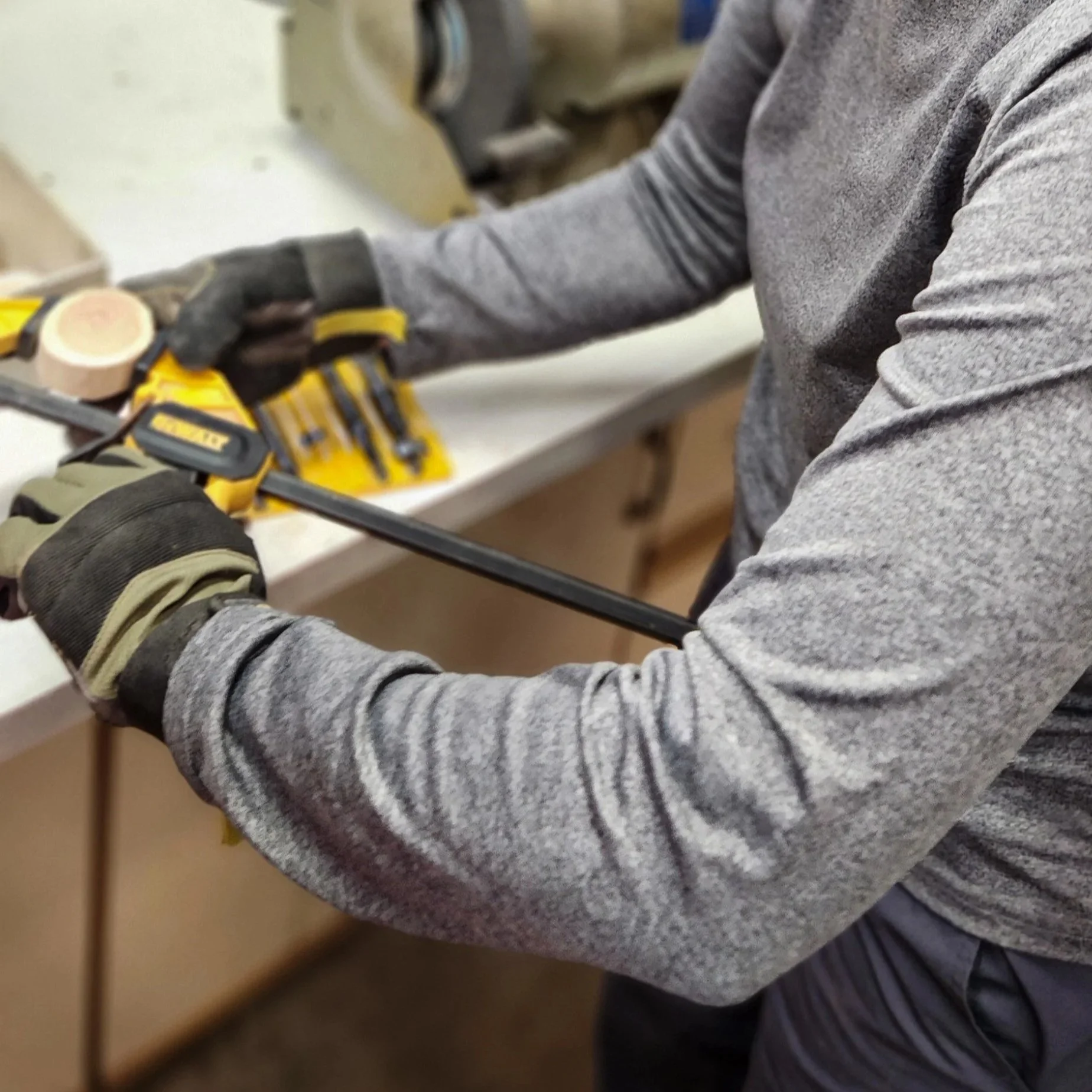
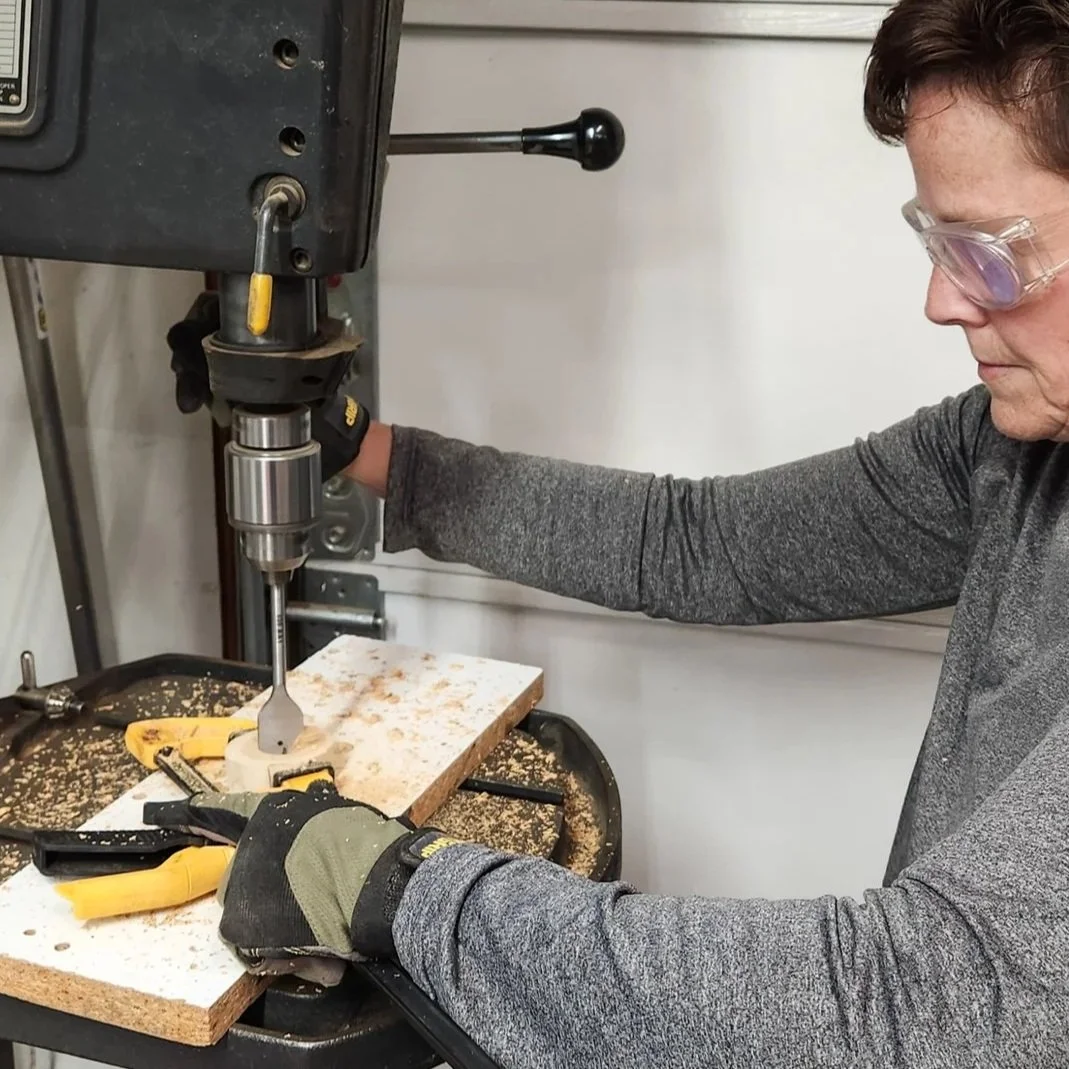
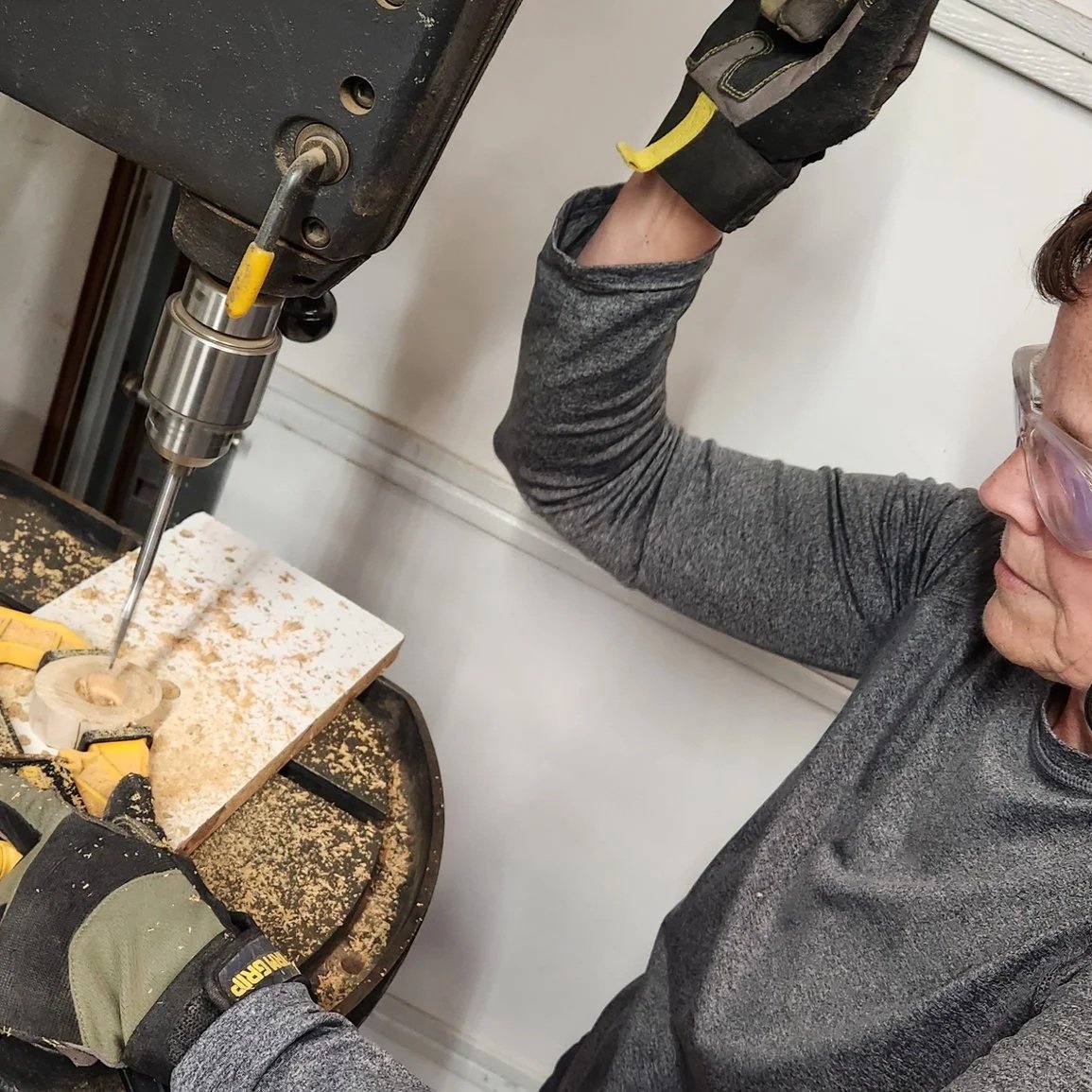
I try not to sand the wood; I do that as little as possible, only for a precise fit when needed. I'm just a detailed person, so it's like a big puzzle to find the pieces that fit naturally. I try to keep it looking real and smooth, like it would if it were on the beach, not change the finish.
These days I make my sculpture, then I'll step away from it, and have my sons (who are creative too) or my husband (he's more analytical), look at it. They are honest with me, and will tell me if there’s anything they’d change or add. The feedback is always helpful.
After finishing each piece of wood with tung oil as I build it, I let my sculptures cure for 3-5 days. Then I put 3 coats of Spar Varathane Urethane varnish on it, the kind of sealant used on boats, so the sculptures hold up darn well.
What do you do with your finished product?
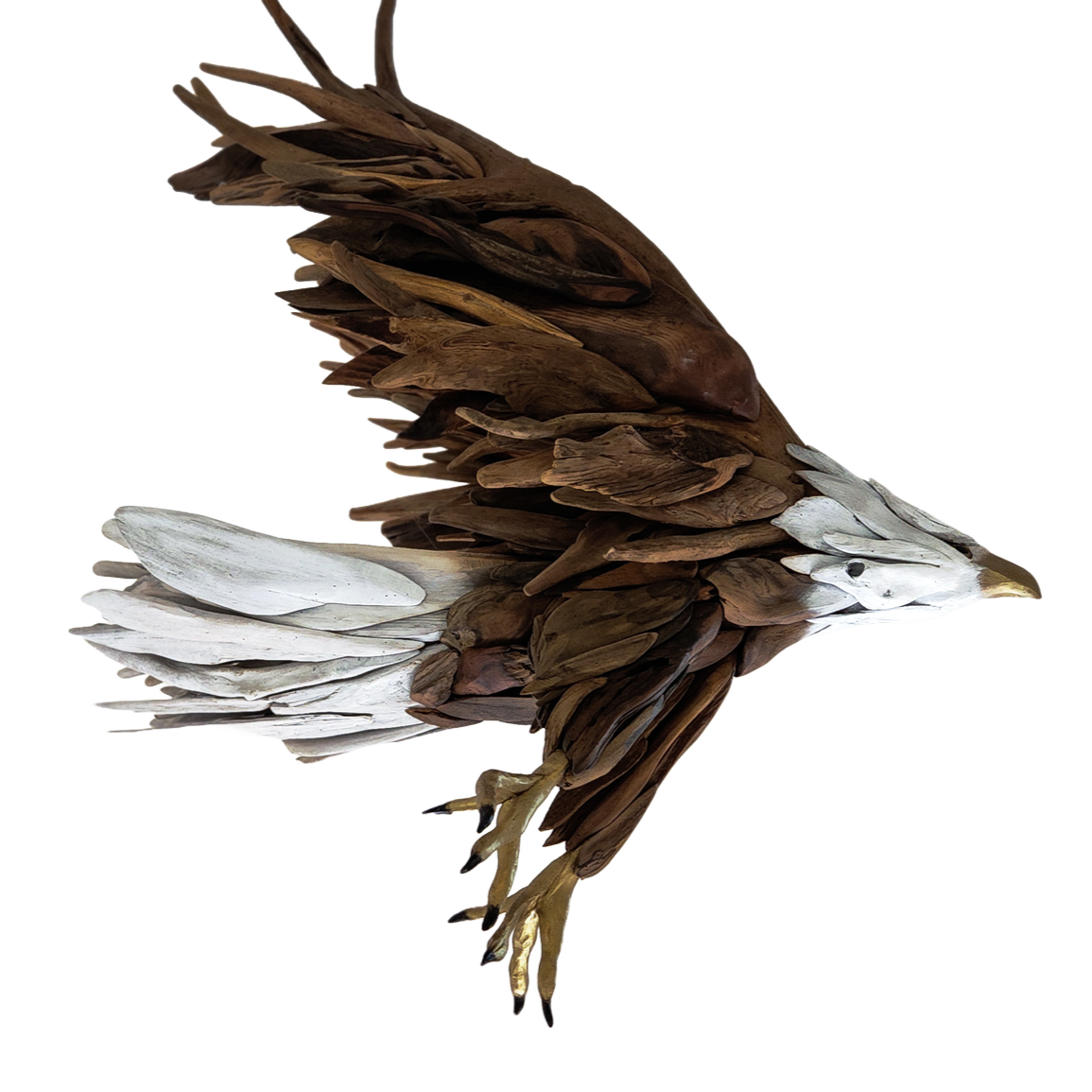
Molly: When it comes to the finished product, I go to art shows throughout the year, and I also make custom pieces by commission. I prefer commissions because the shows are, oh my, we go to Reno and Sun Valley, Idaho, and I've got one in Edmonds in a couple of weeks, and they are a ton of work, transporting the sculptures. We have a cargo trailer, pop-up tents, and more than a dozen crated sculptures in that trailer. We are moving a life-size cougar, Eagle, and so on. Thankfully, Brian crates them for me. He is honestly my hero, I couldn't do the shows without him, or deliveries. And our boys, who are huge and ex-military, and their friends help; they are part of our paid crew whenever we need them. Thankfully, I also have a website, and it's been a huge blessing to have people contact me through it, to purchase my sculptures and request commissioned pieces directly.
But the hardest part of the process, that requires prayer, is marketing. I always tell people, “There’s a reason people have marketing degrees.” That really is the hardest part. I can build sculptures all day long, but I get stressed about the marketing. Then I just stop and have to rely on faith, because God brought this career path into my life in such an obvious way that we couldn't deny that it was a blessing, and something bigger than our plan. And I've pursued it, and keep pursuing it with my husband's encouragement and support, for that reason. God has always taken care of us. He's never given us way too much, just enough. And just enough is such a good place to be because you rely on Him, and don’t get too proud. When we do have extra, it’s good to give it back, our time and money to help others.
What kind of creative space do you have?
Molly: It has been a process. When I started, I had a partially covered shelter in the side yard. Then I rented a space from a couple from the church, and it thankfully had heat, which helped. After that, we went ahead and cleared out our family workshop and put in insulation, sheetrock, and a heater. It’s now my own space, and I can work there year-round. I try to keep it organized, and always put things away as I go. I have shelves, a rack, and boxes for tools, wood, fasteners, and so on. We’ve also recently added rubber mats to help with standing for long hours on concrete.
What words of encouragement would you like to share with others?
Molly: If you are interested in developing your art, but don't think you're a good artist, I would say, “Don't go there. Don't compare yourself to the person next to you, don't ever do that.”
Enjoy your art and consider it a blessing from God, because it's a gift. Enjoy your art and the making of it. I mean, I had an amazing art teacher in high school, who so encouraged me to go to art school. I model my teaching after him when I can, because he was such a great teacher, and it's really fun to encourage others, like he encouraged me.
If you have a gift and joy in it, it is such a blessing to get paid to do what you love. A lot of people don't get to, they have a job that is a drudge. If at all possible, do what you love; it's such a blessing. And if you have kids who are artistic encourage them, and what they want to pursue. I want to encourage creative people to be who they're going to be, kids and adults alike. If you have to work a job you don't care for, take time for yourself to do what you enjoy! And don't compare yourselves to anyone else. We all have different gifts. And if you enjoy something, but you don't feel it's your gift, do it anyway because you enjoy it. The joy is meaningful.
Quotable Molly:
“So many mediums, so little time!”
“Take time for yourself, to do what you enjoy!”
“Don’t compare yourself to the person next to you, don’t ever do that. ”
“I want to encourage creative people to be who they’re going to be, kids and adults”
CHECK OUT molly ’S WEBSITE & INSTAGRAM
TO SEE MORE AND TO FOLLOW
All photos used with permission. Photos provided by Molly Omann.
(Text briefly edited for continuity and length)