ABOUT RUSTIKATE
Rus-ti-kate
(Modified version of the word “rusticate”)
A verb, by definition, it means:
1. To retire to the country
2. To become rustic in style or behavior
3. To alter, modify, cause to change, make different, cause a transformation
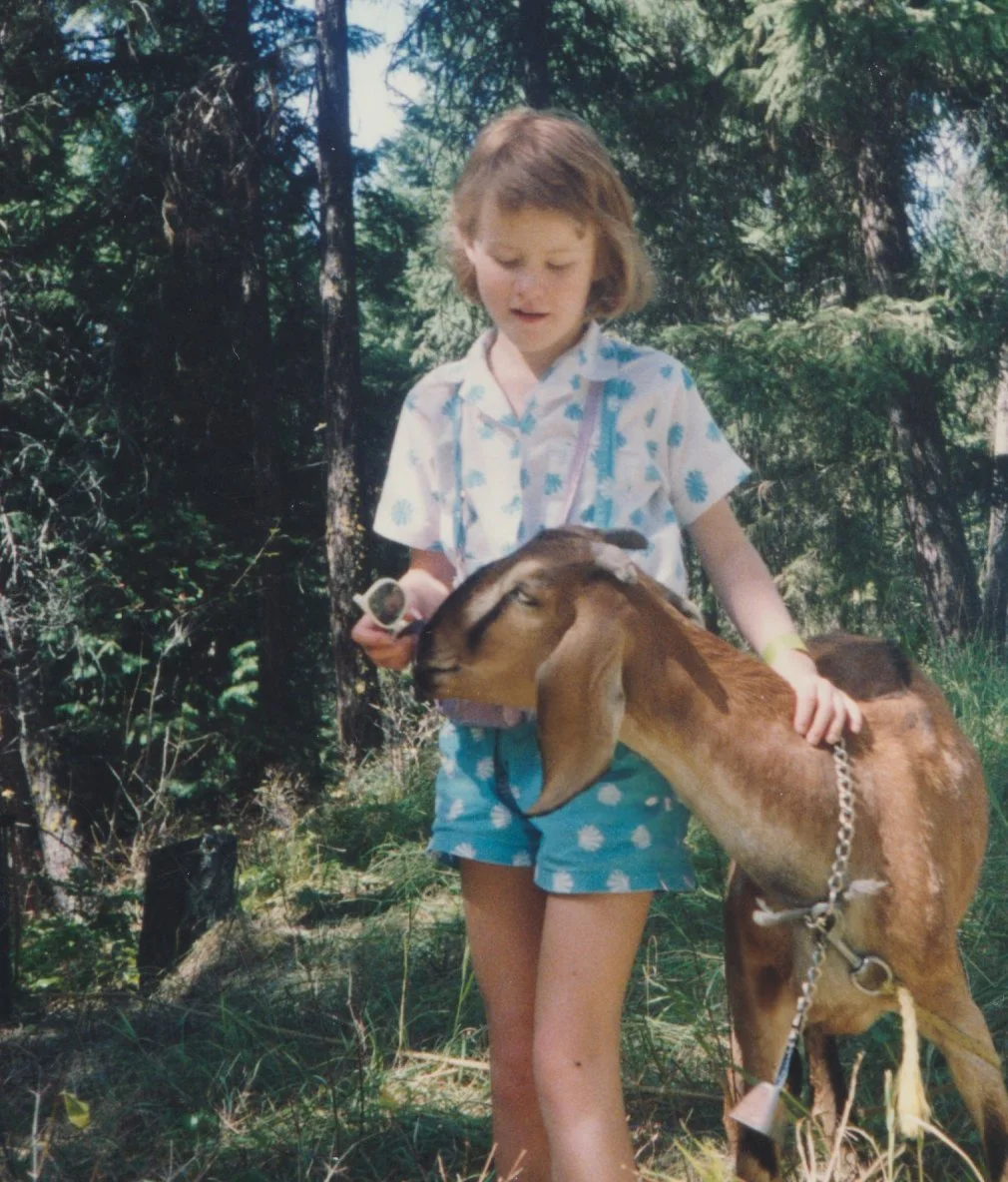
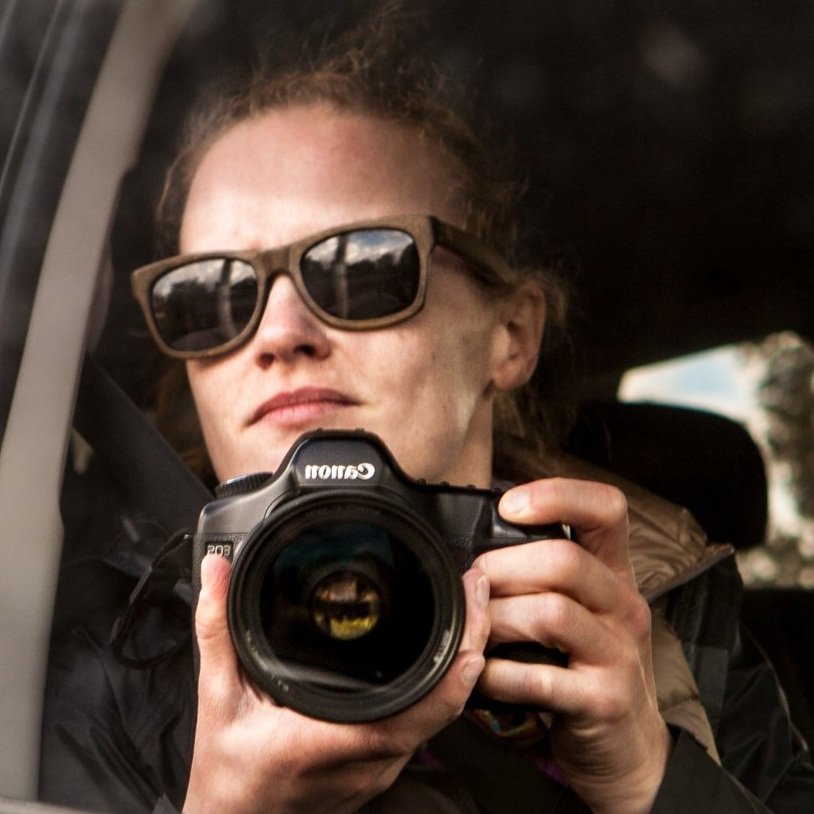
Katy King is the girl behind RustiKate. She grew up in the mountains, slept in the loft of a log cabin, cared for animals (pictured: Katy, aged 10, and her goat “Fred”), chopped a lot of firewood, and shoveled a lot of snow. At 13, she learned to needle tat, and it became a lifelong love.
In the years since, Katy has worn many hats. Starting out, she painted murals, mowed lawns, cleaned houses, and taught tatting and craft classes on the side, while going to school. Her first full-time job was in design and development for MaryJane Butters' publications. She was a seamstress, pattern developer, photographer, how-to and tatting instructor, as well as an instructor at the Paydirt Farm School. After the high-paced creative publishing world, she taught needle tatting for over fifteen years, started a YouTube channel, wrote and illustrated a book and a short story, performed missionary and humanitarian services, and worked in a horticultural therapy program. Later, Katy worked and studied natural farming methods (including Korean Natural Farming) and became a Wilderness First Responder (WFR). In time, a fitting and happy culmination of interests led her to a degree in Occupational Therapy (COTA). The sum of experiences has shaped her to look for simple solutions and ways to adapt and modify tasks and activities, and be a firm believer in the value and importance of hobbies, creativity, and community.
Through RustiKate, Katy hopes to encourage you to take heart, be inspired by the simple things in your own life, and to embrace your own creativity.
“There is worth in creating and recreating, adding little bits of beauty and joy to the world, and in sharing it with each other. ”

ABOUT TATTING
What is Tatting?
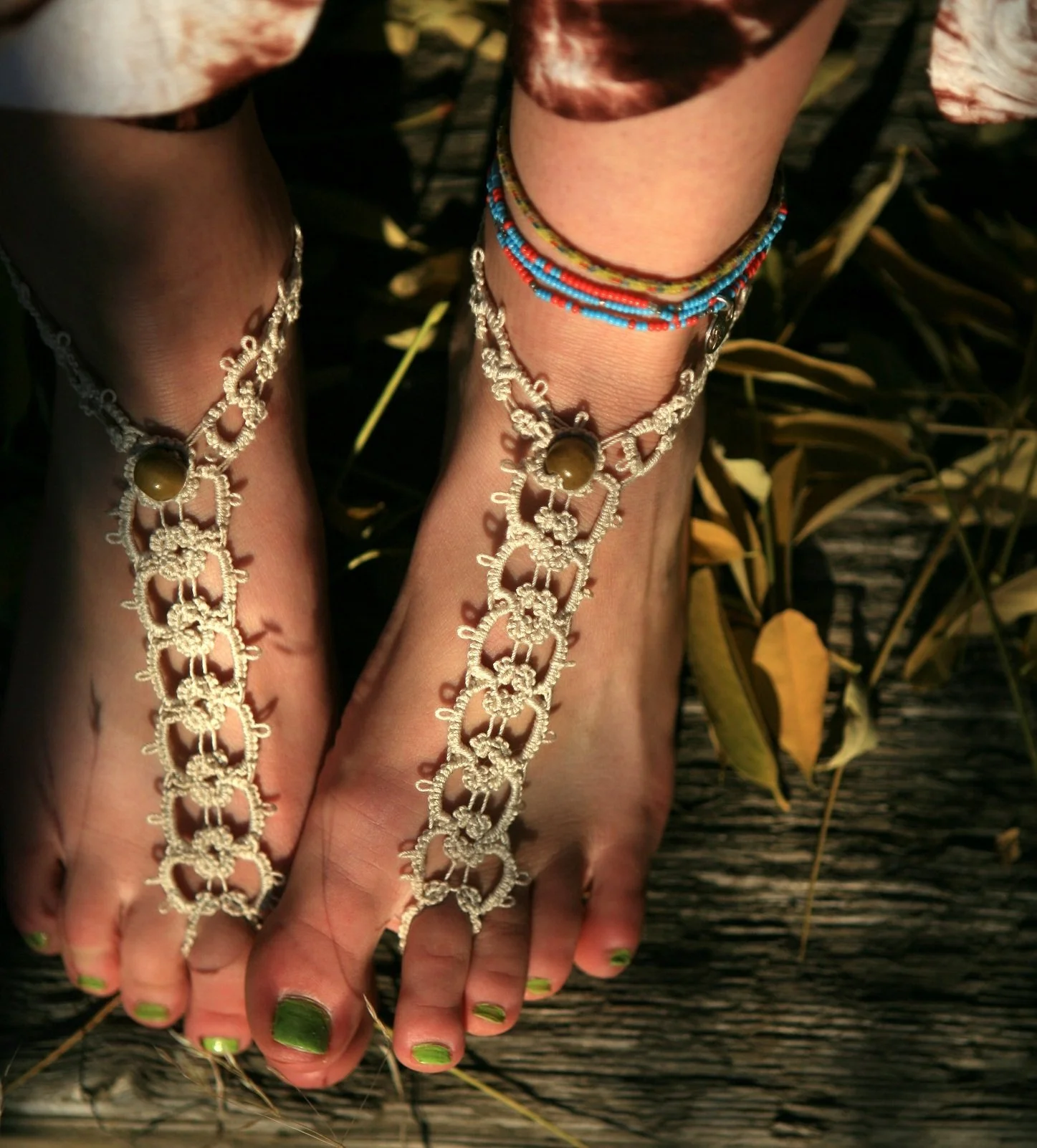
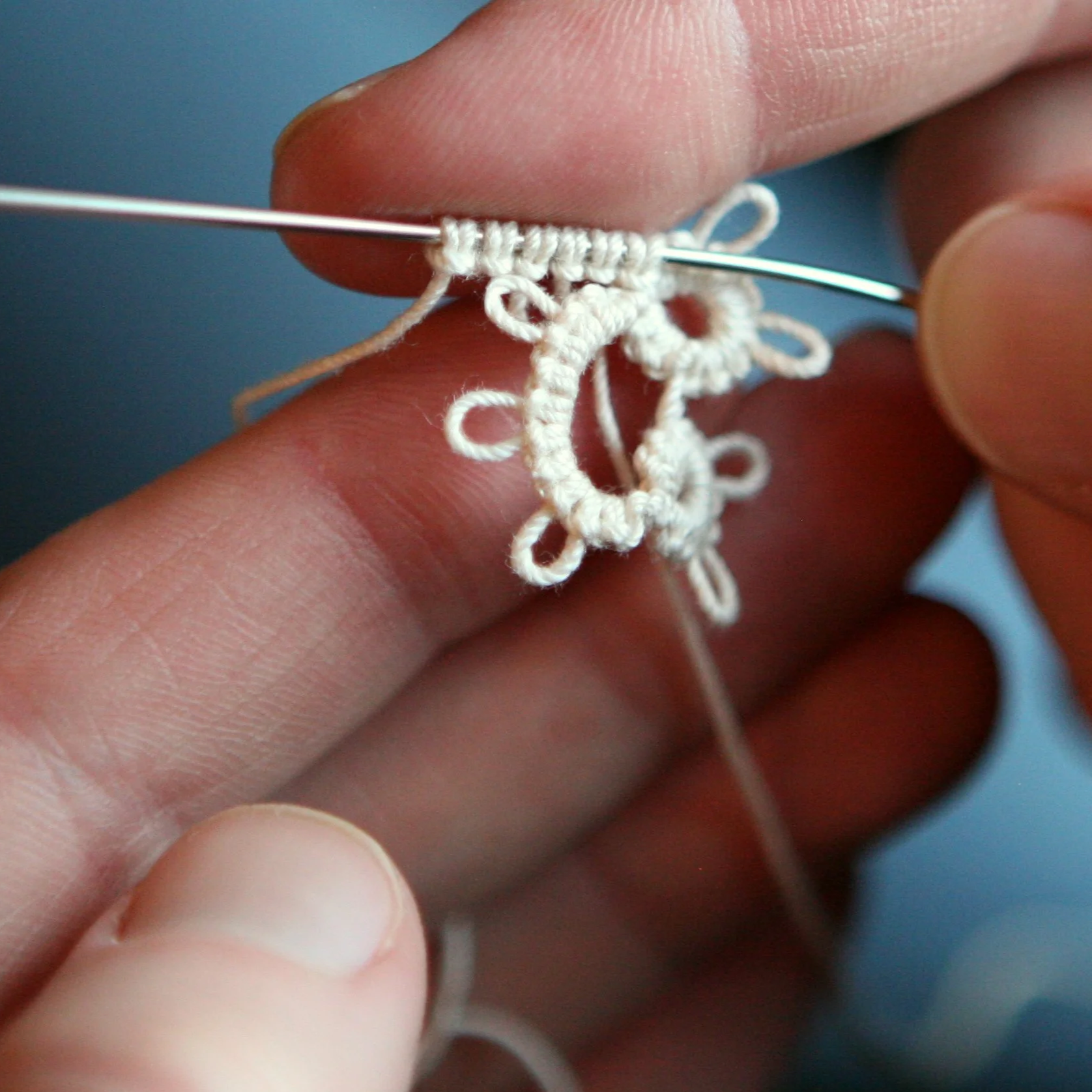
Tatting is a technique for handcrafting delicate, yet durable, lace from a series of knots and loops, which is said to have first emerged in the 18th century. There are two primary methods of tatting: shuttle tatting and needle tatting. Its origin evolved from the strong and durable structure of the cow hitch or lark’s head knot, used since the first century as a sling knot for transporting objects, and as an essential medical and nautical knot—a knot rooted in pure practicality and function.
Is Tatting a Lost Art?
No tatting is not a lost art, even though it is often referred to as one. Tatting’s popularity has ebbed and flowed over the years, but it has experienced a new found popularity internationally in recent years, among crafters and artists of all ages.
For more tatting talk, see Katy’s article entitled “Not Just Another Pretty Lace.”